Why Zero Code Protocol Integration Fails in Real Industrial Systems
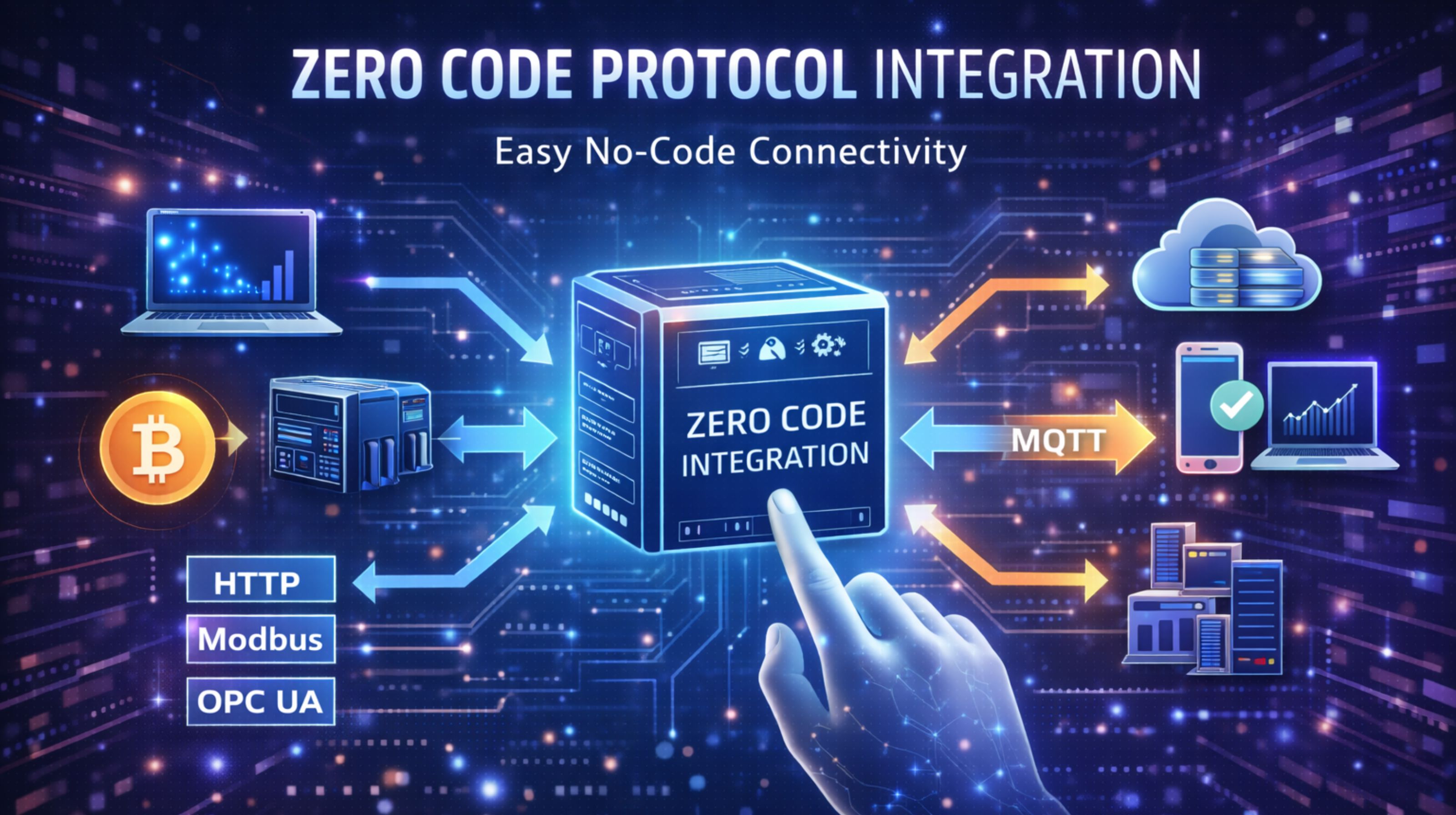
Why Zero Code Protocol Integration Fails in Real Industrial Systems
Teams pick zero code tools to avoid complex programming, which makes sense. But the real friction isn't coding—it's the hidden commissioning and validation steps that still demand deep protocol knowledge. That promise of a simple drag-and-drop interface? It often masks the operational reality of timeouts, data mapping errors, and silent failures that only show up under real load.
What Zero-Code Really Means for System Reliability
In practice, zero code means you configure, not program. You're still defining data points, polling rates, and failover logic, just through dropdowns and forms instead of scripts. The critical thing to realize is you haven't eliminated the engineering; you've just changed the interface. The system's reliability now hinges entirely on your configuration's accuracy and the underlying protocol gateway's robustness. That's why something like a protocol health audit becomes essential, even in a supposedly codeless setup.
The Reality Under Load: Timeouts and Data Gaps
During quiet testing, everything looks fine. But under real production load, with multiple devices talking at once, that's when zero-code integrations start to crack. The most common failure isn't a crash—it's a slowdown. Increased latency causes read/write timeouts, which the system might just log as a simple communication error while critical data quietly goes missing. I've seen systems where a zero-code BACnet integration worked perfectly until the building's HVAC system started its morning ramp-up, overwhelming the un-tuned polling engine and dropping setpoint data.
Common Misunderstanding That Causes Bad Decisions
The biggest mistake is assuming "zero code" means "zero protocol knowledge." Teams often think they can connect a Modbus device without understanding register types, byte ordering, or the device's specific data schema. That leads to wrong data mappings, which pollutes databases with garbage values. The failure pattern is subtle: the integration appears successful, data flows, but the values are meaningless or scaled wrong. Then automated systems start making decisions based on that bad data. It's a primary risk in IT/OT integration projects.
How to Decide If a Zero-Code Tool Is Deep Enough
Your decision really hinges on protocol complexity and how much fault tolerance you need. For simple, static data reads from a few devices, a robust zero-code platform might be enough. But for complex, bidirectional control, multi-vendor systems, or mission-critical operations, you need to verify the tool's depth. Can it handle protocol-specific error recovery? What about unsolicited messaging, or custom data types? Don't evaluate the marketing—look at the tool's actual logging detail and its ability to let you trace a failure back to a specific network frame or device response.
FAQ
Question: Is zero code integration faster than traditional programming?
Answer: The initial connection is faster, sure. But full, reliable commissioning often takes just as long. You save coding time but spend it on meticulous configuration, testing, and debugging within the tool's constraints, especially with complex protocols.
Question: What's the biggest hidden risk with zero-code tools?
Answer: Silent data corruption. Without code to inspect, you're relying on the tool's black-box logic to handle protocol nuances. A misconfigured data point can stream plausible-but-wrong values for months before an operational failure finally reveals the issue.
Question: Can zero-code handle large-scale industrial deployments?
Answer: Scale is what exposes the limitations. While it might be fine for dozens of devices, scaling to thousands often requires batch configuration features and performance tuning options that a lot of zero-code tools just lack. That can push teams toward custom solutions later on.
Question: How do we choose between zero-code and a custom gateway?
Answer: Base it on long-term system evolution and the support you'll need. If your device types and data needs are basically static, zero-code could work. But if you anticipate new protocols or need deep diagnostic control, a programmable gateway or a managed service like snipcol's Universal Protocol Service gives you the necessary flexibility and expert oversight.