When Your Cross-Platform Data Sync Breaks Trust
When Your Cross-Platform Data Sync Breaks Trust
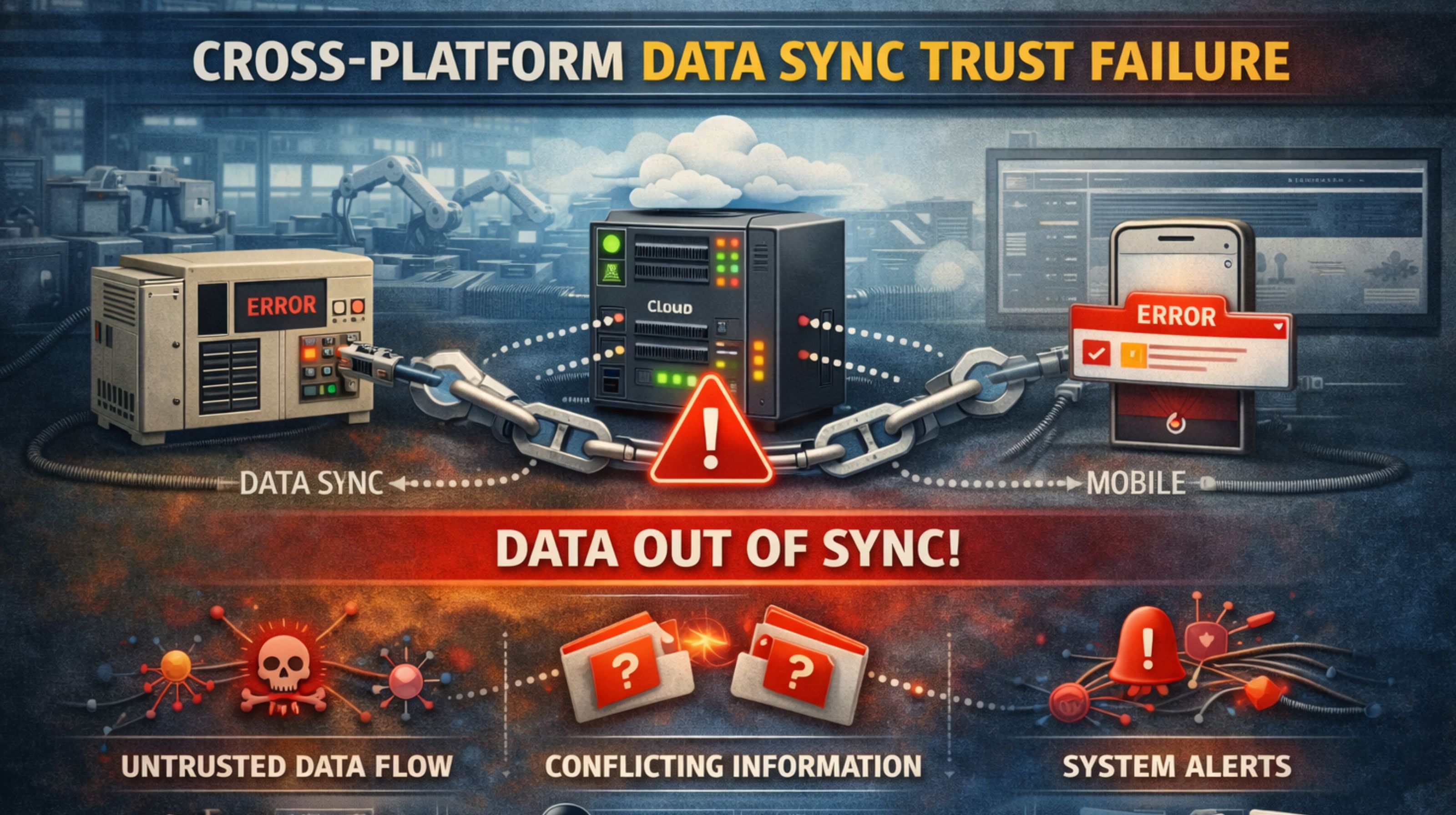
You see the numbers match on the dashboard, but the physical system tells a different story—that's when you know the sync has failed, not technically, but in the one way that matters: trust. It's not just a delayed update; it's that moment your operational confidence just shatters because the data flowing between platforms can't be relied upon for a critical decision.
What Trust Failure Actually Looks Like in Operation
In real systems, trust failure is usually a silent divergence. The cloud analytics platform shows a sensor reading of 25°C, while the local SCADA historian, polling the same device via a different gateway, logs 23.5°C. Both systems report "synced," but the truth is suddenly ambiguous. This often comes from mismatched polling cycles, unsynchronized timestamps, or protocol translation layers that quietly normalize or truncate data without telling you. What teams often miss is that many middleware solutions report sync success based on message receipt, not on whether the data means the same thing or arrived in the right order at the final destinations.
The Reality Under Load: Where Sync Promises Fall Apart
During peak load or network congestion, sync mechanisms frequently end up sacrificing consistency just to keep things available. You might find real-time telemetry syncs, but then batch-processed event logs get queued and applied out of order, which corrupts stateful sequences. This breaks down especially with state-machine data or anything with dependencies, like a series of valve positions. A common trap is assuming all data has equal priority; when the pipe gets full, a lot of systems will drop historical or "non-critical" data first. That data later proves essential for diagnostics or compliance, creating a trust gap in the historical record you thought you had.
The Hidden Risk of Assuming a Single Source of Truth
Probably the most dangerous assumption is designating one platform as the definitive "master" source of truth. In practice, writes happen everywhere—a local HMI overrides a setpoint, a mobile work order app updates an asset status, and the central ERP adjusts a maintenance schedule all at once. Without a robust conflict detection and resolution strategy that all endpoints actually respect, you end up creating competing truths. This pattern leads to operational whiplash, where systems roll back changes based on timestamps or source priority, invalidating legitimate user actions and destroying operator trust. And then your audit trails are fragmented across platforms, making real root-cause analysis nearly impossible.
Deciding How Much Sync Fidelity You Really Need
Not every data point needs millisecond, atomic consistency. The decision has to start by categorizing data by the consequence of it being late or wrong. Real-time control signals require strong consistency; reporting aggregates can usually tolerate eventual consistency. The key is to explicitly define these tiers in your sync architecture and then instrument the hell out of the gaps. You need to know not just if data moved, but its age, lineage, and what happened to it at each hop. This is where moving beyond basic connectors to a managed integration layer with inherent protocol health auditing becomes an operational necessity—it gives you the visibility to maintain trust even when perfect sync isn't realistically feasible.
FAQ
What are the first signs of cross-platform sync trust failing?
You'll hear operators or field teams start saying that "the system is lying." Discrepancies appear in reports from different departments using different platforms. There's a noticeable rise in manual data reconciliation workarounds and people stop trusting the automated alerts.
Can better network monitoring fix sync trust issues?
Only partially. Network monitoring tells you if packets arrived, but not if the data's meaning was preserved. Trust fails at the application and semantic layer—in timestamp interpretation, unit conversion, or state reconciliation—which network tools are completely blind to.
How does scale impact data sync reliability?
Exponentially. As device and transaction volume grows, the probability of transient errors skyrockets. Simple retry logic can cause cascading duplicates or out-of-order delivery. The system that worked perfectly at pilot scale often fails at full deployment because all those edge cases become the common case.
When should we consider a dedicated integration engine over point-to-point connectors?
When you have more than two systems, when the data needs complex transformations or has state, or when the cost of a sync error is operational or safety-critical. Point-to-point connectors create a brittle web that's impossible to monitor holistically, which is a big reason platforms like snipcol focus on the integrity of the data pathway itself as a first-class concern.