When the Integration Reliability Gap Blocks Your System Handover
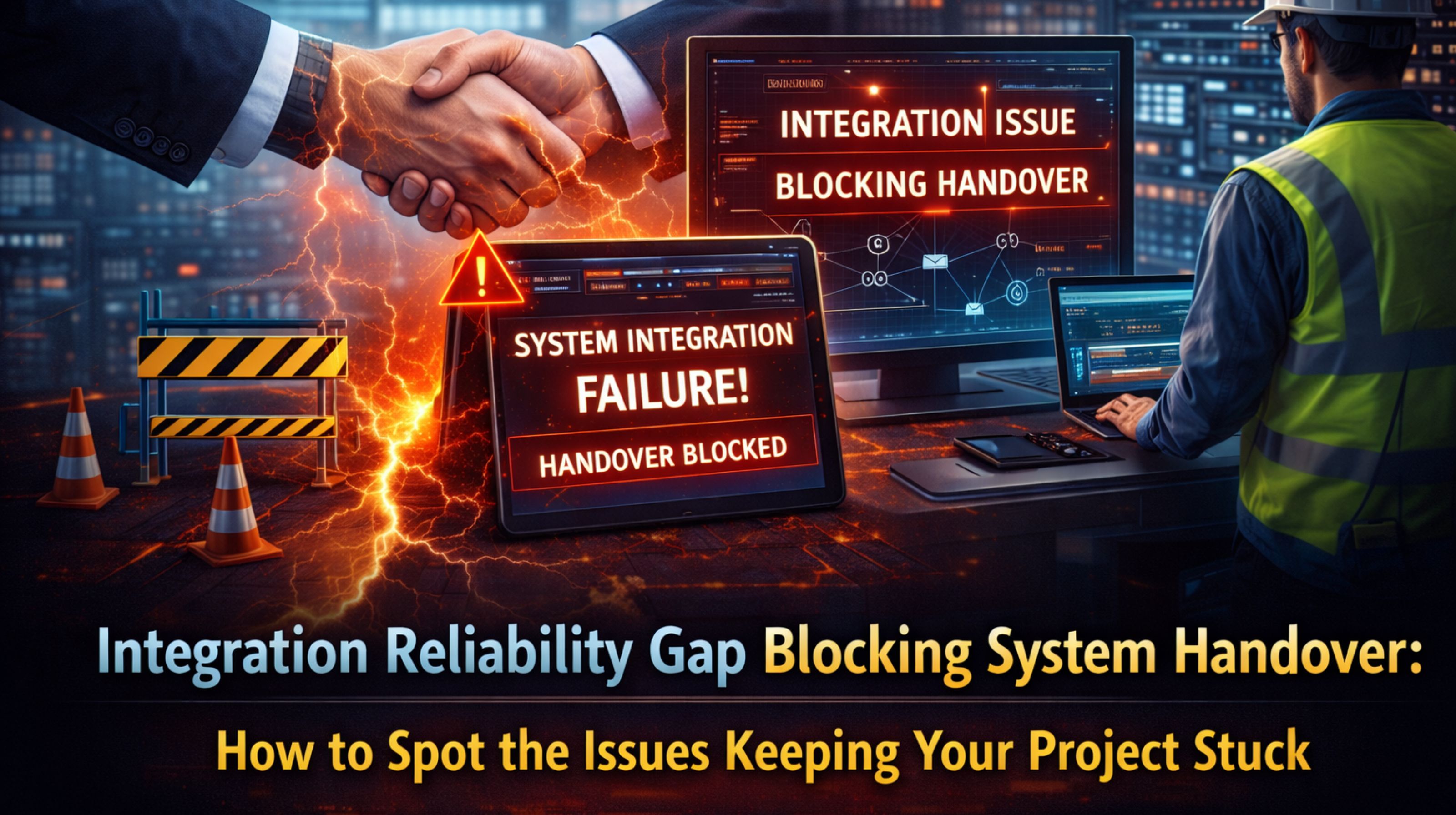
When the Integration Reliability Gap Blocks Your System Handover
You've finished the build, but the final handover just won't move. The subsystems work, but they don't reliably talk to each other when it counts. This isn't just a bug you can patch; it's a deeper gap in how everything connects, creating these unpredictable failures that trap teams in endless testing loops and threaten to blow the entire project timeline.
What the Reliability Gap Means for Your Live System
In reality, an integration reliability gap means your data flows work on the bench but start to crumble under the actual variable loads and spotty network conditions on site. You see intermittent data loss, commands that time out for no clear reason, or systems like HVAC and fire panels falling out of sync. It's this exact unpredictability that gets your handover rejected.
The Reality of Load and Network Fluctuations
What happens is that the connections you thought were stable—maybe you even validated them with a simple ping—they just collapse when you throw real concurrent data at them or hit a latency spike. One tricky detail people miss: protocol timeouts are usually set for ideal conditions. In the real world, a delayed response from a building management system can cascade. A safety system might read that silence as a fault and trigger a false alarm, which of course brings the whole handover process to a standstill.
Common Mistakes That Widen the Gap
The most expensive mistake is treating integration like a one-and-done connectivity check. Teams see a gateway pass data once and assume it'll hold up forever. That thinking leads to a pattern where integration gets signed off before anyone stress-tests for real-world problems like packet loss, buffer overflows, or clock drift between OT and IT systems. Those issues only surface later, during the final integrated testing, when it's most painful.
How to Decide Your Next Step to Close the Gap
The decision here isn't just to "test more." It's about scoping the investigation correctly. You need to figure out if the failure is in the protocol translation itself, the network infrastructure, or the endpoint configuration. Running a targeted protocol health audit, rather than re-testing the entire system from scratch, can actually isolate the faulty layer. For teams stuck in this loop, a focused diagnostic approach—like the one behind our Protocol Health Audit service—shifts the effort from guessing to evidence-based fault isolation.
FAQ
Question: What is an integration reliability gap?
Answer: It's the difference between systems working alone and performing reliably together under real operational stress. It's often the final, stubborn hurdle before handover.
Question: What's the biggest risk if we handover with a small gap?
Answer: The risk is a latent failure. A system that works 95% of the time will almost certainly fail during a peak load event or an emergency. That leads to catastrophic operational disruption and forces you into insanely costly emergency recommissioning.
Question: How do we test for this gap at scale?
Answer: You have to simulate real production load and failure scenarios, not just check data flow. That means deliberately injecting network latency, dropping packets, and running failover tests while monitoring every system state, not just the primary data path.
Question: When should we call in specialized help versus fixing it internally?
Answer: The tipping point is when your internal troubleshooting cycles start repeating without finding the root cause. If your team can't pinpoint whether the fault is in the protocol, network, or application layer after a couple of focused attempts, then bringing in external expertise with deep protocol diagnostics becomes critical. It's the only way to avoid spiraling project overruns.