When Network Downtime Cripples Enterprise Decision-Making
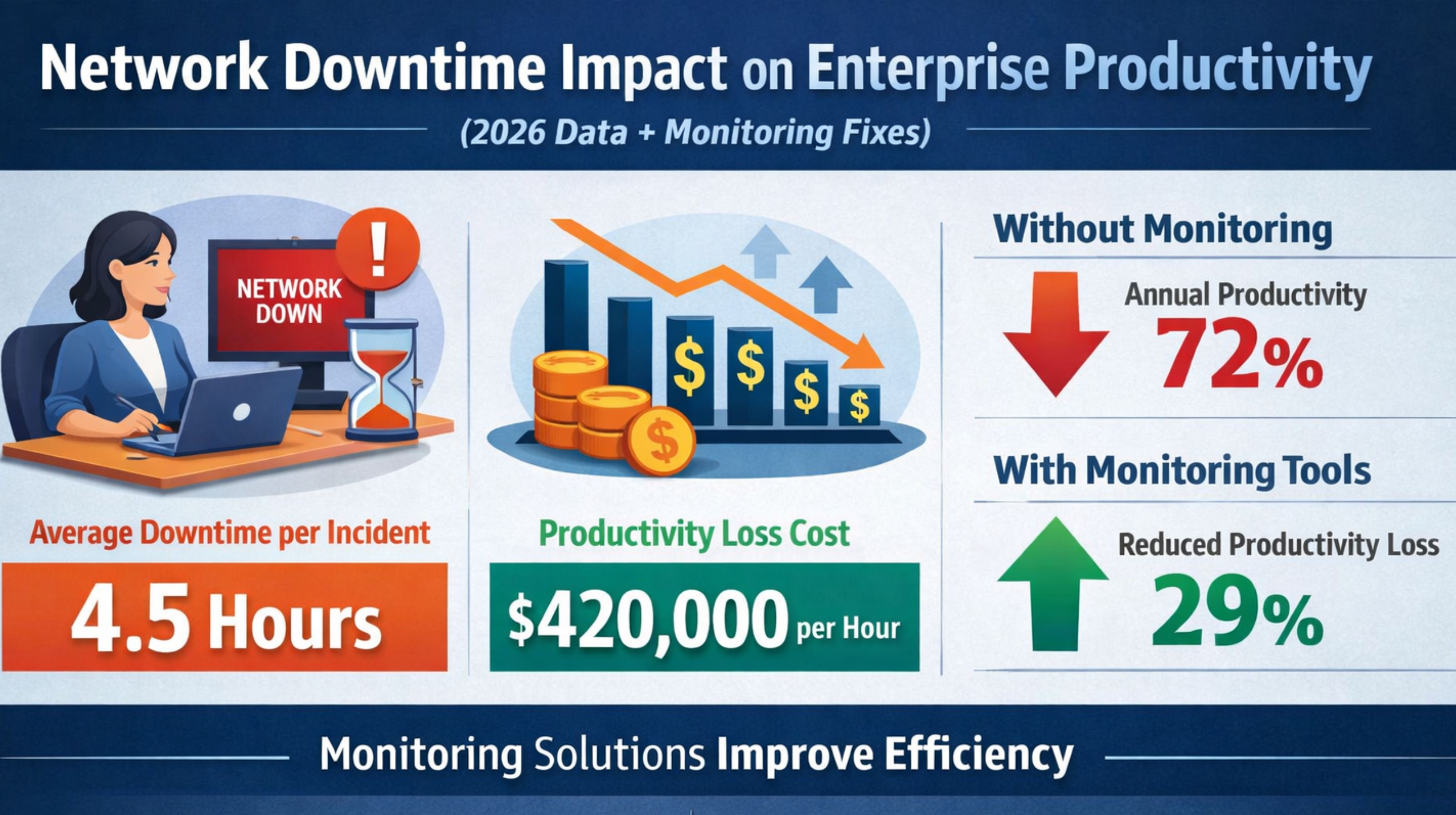
When Network Downtime Cripples Enterprise Decision-Making
We talk about productivity metrics, but that's just the surface. The real issue is that modern network failures create a kind of operational paralysis. Critical data just stops, and suddenly leadership is flying blind right when they need to make a call.
The Real Cost of a Silent Network
In practice, a "down" network means your real-time dashboards freeze. Automated alerts don't fire. Cross-departmental coordination just halts. You end up with isolated teams making their best guesses instead of informed moves.
What Actually Breaks Under Load
Here's the ironic part: during an outage, the monitoring systems themselves often fail to report their own status. That creates a false sense of security. Usually, the first sign of trouble is a person reporting it, not an automated ping, because those heartbeat checks get lost in the same congestion that's causing the problem.
Common Monitoring Gaps That Mask the Problem
A major mistake is only monitoring network device health, not the actual data flowing through it. A router can show "up" while critical application protocols—things like BACnet or Modbus—are timing out. That leaves building systems or production lines in a failed state that goes completely unreported.
Choosing the Right Depth of Visibility
The decision isn't just about hitting uptime percentages. It's about instrumenting your network to tell the difference between a simple latency spike and a complete protocol-layer failure that needs immediate intervention. That nuance is what defines modern operational resilience.
FAQ
Question: How long does network downtime typically last in an enterprise?
Answer: Honestly, the duration is less relevant than how long it takes you to detect it. The real impact is measured in that "blind period" between when the failure starts and when your team actually becomes aware of it. That gap can stretch for hours if your monitoring is too shallow.
Question: What's the biggest risk with cloud-based monitoring during an outage?
Answer: If the monitoring service's outbound path relies on the same failed network, then all your alerts and data are lost internally. It creates a total blackout. You really need some kind of independent, on-premise heartbeat verification to avoid that.
Question: Can you monitor for downtime without affecting network performance?
Answer: Lightweight, passive protocol analysis is key. Aggressive, constant polling can itself become a source of congestion and false positives. This is especially true on industrial networks, which are often more sensitive.
Question: How do we prioritize what to monitor first?
Answer: Start with the data flows that directly trigger operational decisions or safety shutdowns. You need to map the network for single points of failure—where one loss means multiple critical systems go dark at once. That's a specific focus for specialists like snipcol during their health audits.