When Multi-Protocol Integration Fails Under Real Load
When Multi-Protocol Integration Fails Under Real Load
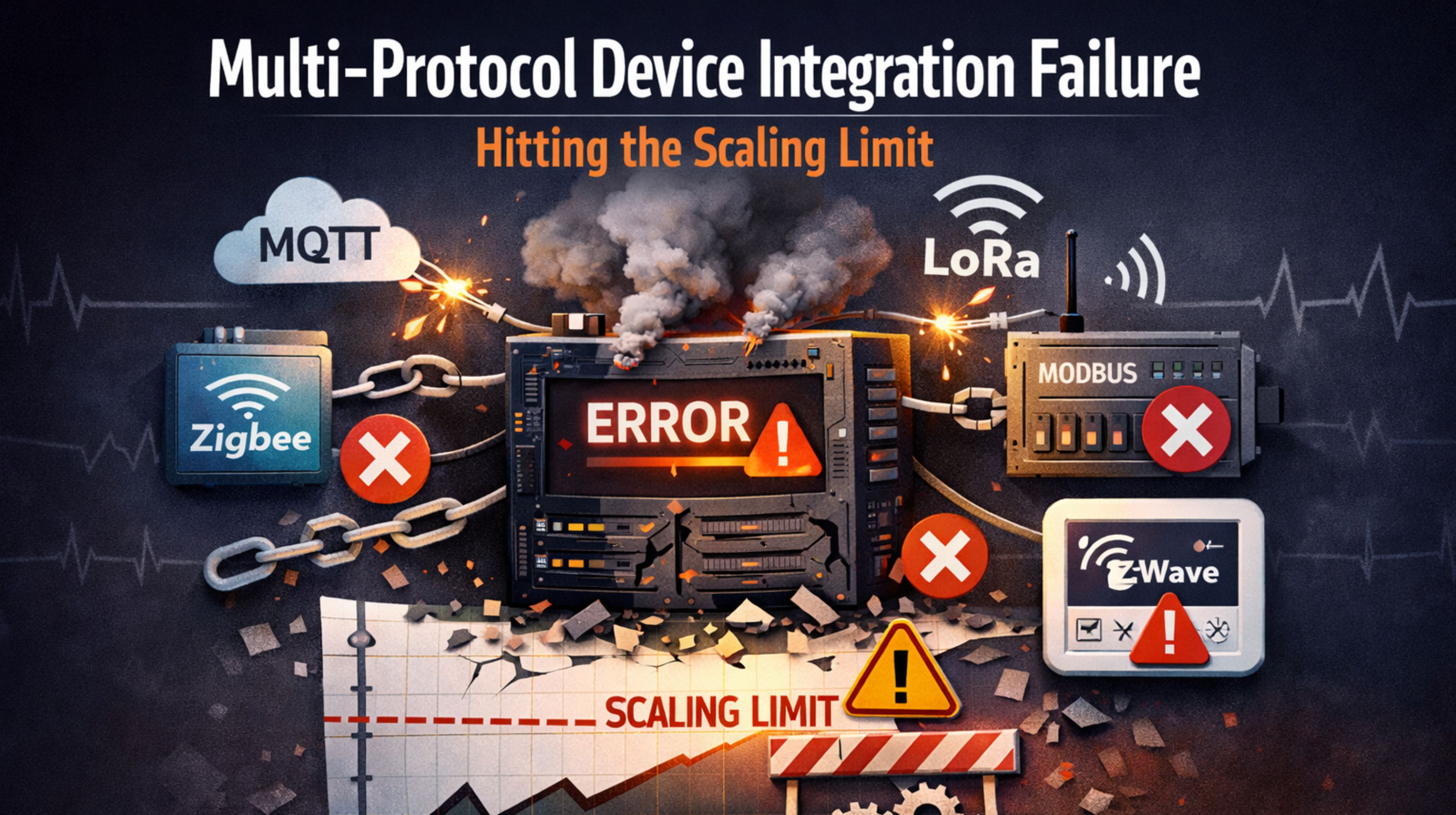
So you've connected your BACnet, Modbus, and MQTT devices, but then the system just slows to a crawl. Or it starts dropping critical data points as you add more assets. This isn't really a simple bug you can just fix; it feels more like a fundamental scaling limit. It's where protocol translation overhead, those endless polling cycles, and general network chatter all collide under actual production load.
What "Multi-Protocol" Really Means in a Live System
In practice, you have to think of multi-protocol integration as a real-time data brokerage service. Each gateway or middleware node isn't just translating; it's managing state, handling reconnection logic for unstable industrial links, and queuing messages between systems that have completely different timing expectations. The moment one protocol's heartbeat gets delayed, the entire data flow can just... desynchronize.
The Reality Check: What Breaks First at Scale
Under real load, you see timeouts cascade. Picture a Modbus TCP master polling 100 holding registers—it hits a single slow device, and its thread blocks. That backlog then delays the subsequent BACnet read schedules. Before you know it, MQTT publish intervals are missed, and upstream applications are receiving stale or incomplete snapshots. The failure is rarely a dramatic crash; it's this gradual degradation of data fidelity that's surprisingly hard to set an alarm for.
The Critical Mistake: Assuming Linear Resource Scaling
I think the most common wrong assumption is that throwing more CPU or memory at your integration server will solve these scaling limits. In reality, the bottleneck is often the conversational nature of the protocols themselves. Each new device adds not just data points, but session overhead, retry potential, and this exponential complexity to state management—the kind a simple cloud IoT bridge might not be built to handle. Teams often miss the non-linear growth in network socket connections, and the memory footprint of maintaining context for thousands of simultaneous, half-open industrial protocol conversations.
How to Decide Your Integration Depth and Next Step
The real decision isn't about supporting more protocols; it's about managing conversational load. You have to audit the actual message rates, timeout thresholds, and error-recovery chatter of your current setup. The next step is often moving away from a centralized translator to a federated model with protocol-specific edge agents, where a failure can at least be contained. For teams already deep in this complexity, evaluating a dedicated universal protocol service can shift the operational burden—from building state machines to just managing data contracts.
FAQ
Question: How many devices can a multi-protocol gateway handle before failing?
Answer: Honestly, there's no universal number. The limit is usually defined by the slowest protocol's timeout setting, multiplied by the number of concurrent sessions it has to maintain. If you exceed available sockets or thread pools, you'll often get silent packet drop, not a helpful error log.
Question: What's the hidden risk when integrating BACnet and Modbus?
Answer: The hidden risk is clock skew and data freshness. BACnet's change-of-value reporting and Modbus's rigid polling cycles can create a scenario where data from the same moment in time is presented minutes apart. That can lead to some really faulty control logic.
Question: Does moving integration to the cloud solve scaling limits?
Answer: Often, it actually makes latency worse. Cloud-based integration adds a WAN link to already chatty local protocols. That round-trip delay can cause local timeouts to trigger more frequently, which just increases retry traffic and compounds the load it was meant to solve.
Question: How do we choose between a single gateway or multiple dedicated bridges?
Answer: It really hinges on fault isolation. A single gateway is simpler, right up until it becomes a single point of failure. Multiple bridges—maybe leveraging a focused protocol health audit—allow one protocol's instability to be contained. That preserves data flow for others, but at the cost of managing more components.