When Does 5G-to-Satellite Failover Actually Work?
When Does 5G-to-Satellite Failover Actually Work?
You're probably looking at a hybrid 5G-satellite setup because you need a connection that just doesn't drop. But the sales pitches tend to skip over the gritty, operational reality. This isn't just plugging in two modems; it's managing a handoff that almost never happens on its own the way you'd hope.
What Failover Configuration Really Means
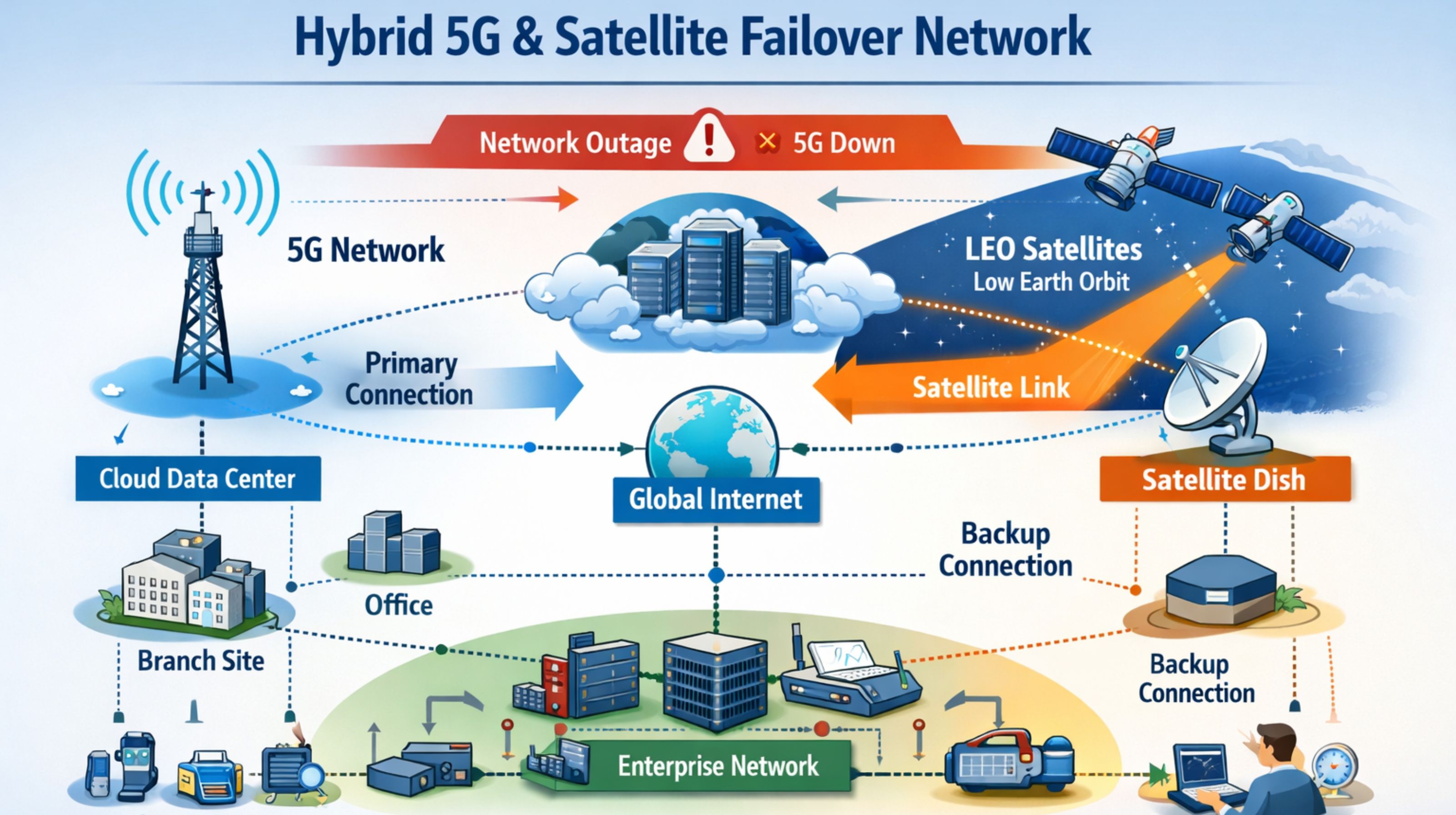
In the real world, configuring this means your 5G connection is the workhorse, with a satellite terminal sitting there as a dormant backup. The system's supposed to watch the 5G link for trouble—latency spikes or a total loss—and then trigger a switch. I've seen setups where that satellite modem just hums along in standby for months on end, a quiet insurance policy you forget about until a cellular tower goes down.
The Reality of the Automatic Switch
They promise it's instant and seamless. The truth is, there's always a delay. You're looking at anywhere from 15 seconds to well over a minute while the satellite terminal finds a signal and gets a link established. In that gap, anything live—like a VoIP call or a video stream—is going to drop. And here's the kicker a lot of businesses miss: that "automatic" system usually needs you to manually switch it back to 5G once service is restored. Otherwise, you're stuck burning money on satellite data.
The Hidden Cost of Getting It Wrong
The biggest pitfall is thinking of satellite as a one-to-one replacement for bandwidth. It's not. Satellite links come with high latency and, more often than not, pretty strict data caps. A common misunderstanding is that failover will handle a bandwidth-heavy video conference just fine. It won't. The video will likely be unusable. And if your primary link fails during a big file transfer? You could blow through a month's satellite data allowance in a single day, which leads to some serious bill shock.
When This Configuration Makes Sense
This whole setup only makes sense—financially and technically—for specific uses. We're talking about non-real-time applications where a brief hiccup is okay, but being down for hours or days isn't. Think point-of-sale systems sending transaction data, or environmental sensors out in the boonies. It's a poor fit for general office internet or any work that's sensitive to lag. The practical detail everyone seems to ignore? You have to test it. Manually. Every month. If you don't, you'll find out it doesn't work precisely when you need it to.
FAQ
How long does it take to switch to satellite?
Usually between 30 and 90 seconds. It's not instant, so anything needing a constant connection will see a break.
Will my internet speed be the same on satellite?
No. Satellite latency is much higher—think 600ms or more—so everything feels sluggish. The bandwidth is also usually capped way tighter than 5G.
Does the system switch back to 5G automatically?
Most off-the-shelf, consumer-grade systems don't auto-failback. You usually have to manually flip it back to stop racking up satellite charges.
What's the most overlooked part of setup?
Getting the failure detection thresholds right. Set them too sensitive, and you'll bounce to satellite for no good reason. Set them too loose, and the failover might not kick in when it actually should.