IO-Link sensor protocol to OPC UA cloud integration software 2026
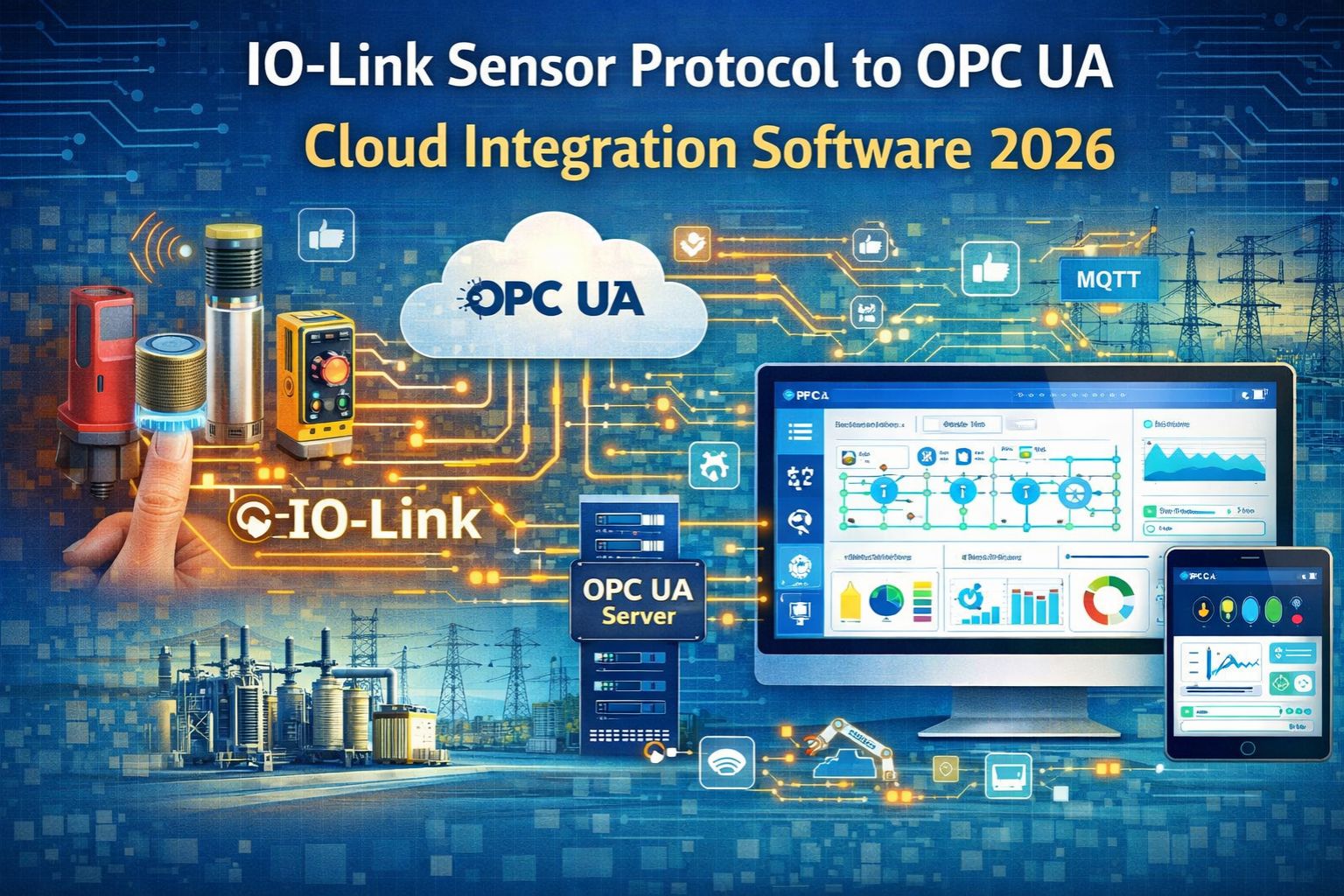
IO-Link sensor protocol to OPC UA cloud integration software 2026
So, integrating the point-to-point IO-Link sensor protocol with OPC UA cloud software in 2026. It sounds straightforward on a spec sheet, but you quickly hit a fundamental data pipeline mismatch. The deterministic, cyclic data from the sensor layer just doesn't want to map cleanly onto the asynchronous, publish-subscribe model of OPC UA servers. The result isn't always a crash—it's often silent data loss, and at scale that's a real problem.
Clarity: The Protocol Translation Gap
Look, the core issue isn't really about connectivity. It's about semantic translation. IO-Link has these device-specific data structures and process values that need to be manually modeled into OPC UA's information model. That's a non-trivial task, and honestly, most gateway configurations just oversimplify it. You end up with unreadable or, worse, mislabeled data points in the cloud, which makes the whole exercise pointless.
Reality Check: Live Data Flow Breakdown
In theory it works. Under live conditions, it's different. The constant polling of hundreds of IO-Link sensors creates these micro-bursts of traffic. They can easily overwhelm the OPC UA server's session handling, especially once you add cloud latency into the mix. The outcome? Missed sensor state changes. You get a lagging view of machine health that completely defeats the purpose of calling it "real-time" monitoring.
Mistake: Assuming a Simple Gateway Fix
I see this pattern all the time. The most common failure is assuming a standard off-the-shelf industrial gateway can handle the translation. That thinking ignores the need for custom data aggregation and buffering logic—you know, to manage the totally different cycle times between IO-Link masters and the OPC UA client's subscription intervals. It's a critical misunderstanding, and it directly causes system instability down the line.
Decision Help: Tune, Reconfigure, or Redesign
So what do you do? The decision boundary is actually pretty clear. You can try to tune timeouts and buffer sizes, but only if your sensor count is low and your latency tolerance is high. For any critical process with more than, say, 50 sensors, that's not enough. You'll have to reconfigure the data model and aggregation logic at the edge. Or, you might need to fully redesign the architecture using a purpose-built protocol service layer—something that handles the stateful translation internally, so you don't have to.
FAQ
Question: What is the main problem with IO-Link to OPC UA integration?
Answer: Honestly, the main problem is a semantic and timing mismatch. IO-Link's cyclic, device-specific data doesn't natively map to OPC UA's asynchronous object model. It requires complex, stateful translation that generic gateways often just fail to perform reliably.
Question: Can I use a standard industrial protocol gateway for this?
Answer: You can, maybe for a proof-of-concept. But standard gateways typically lack the deep data modeling and buffering logic you need to prevent data loss or jitter when you scale beyond a handful of sensors. That makes them a real risk for a production environment.
Question: How does cloud latency affect IO-Link data in OPC UA?
Answer: Cloud latency introduces unpredictable delays. It's the gap between the OPC UA client's read requests and the sensor's actual state. That means your cloud software ends up acting on stale data, which is frankly dangerous for any control or alerting logic you have running.
Question: When should I consider a full architecture redesign?
Answer: Consider a redesign when the internal fixes—like tuning timeouts—stop working. That usually happens when sensor counts grow, cycle time requirements tighten, or when you absolutely need reliable historical data traceability. That's the scenario where a foundational protocol translation service becomes necessary.