Industrial Automation Event Log Integration
Industrial Automation Event Log Integration
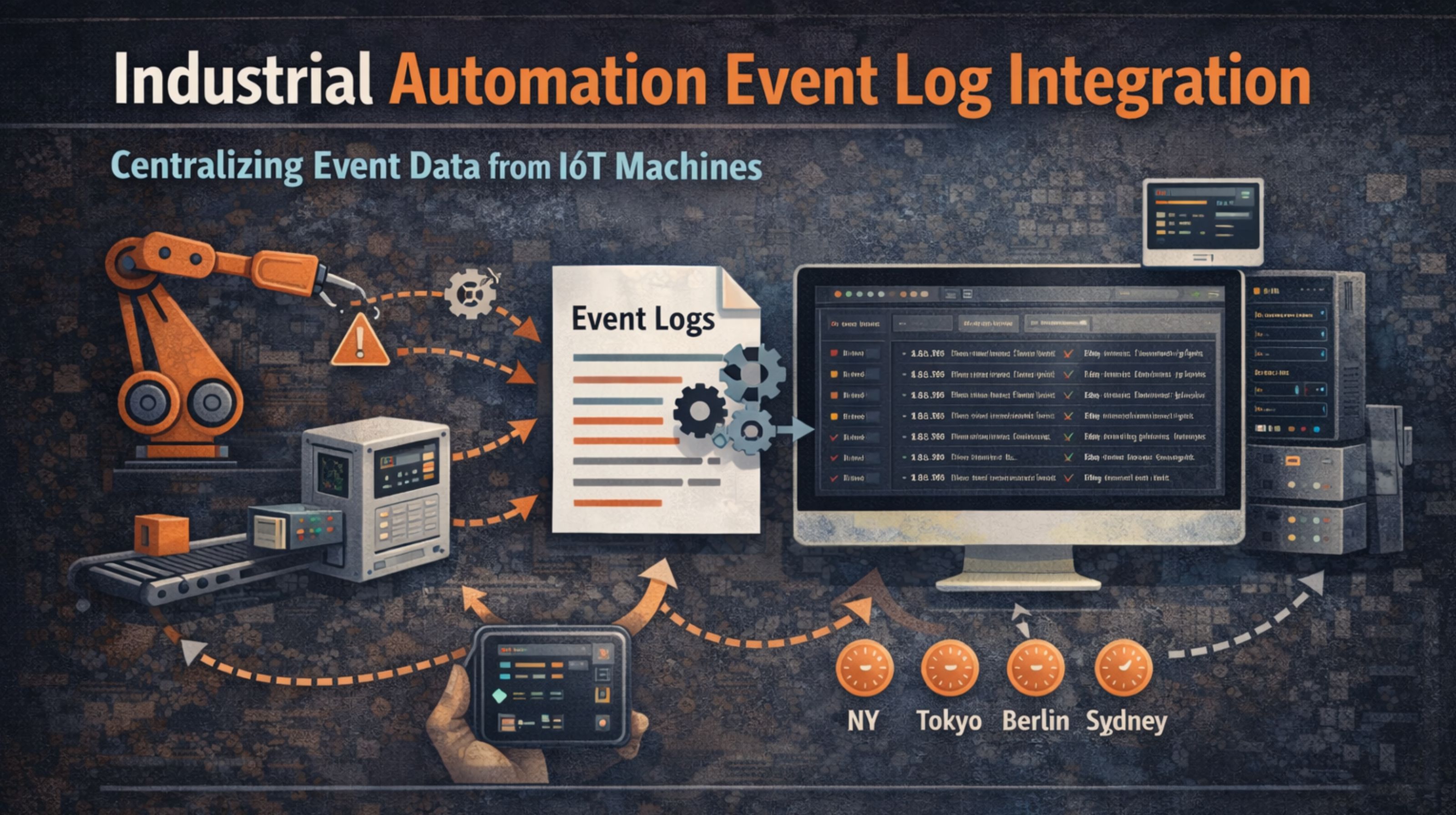
In industrial automation, event log integration is really about pulling together all that operational data from different control systems—collecting it, standardizing the format, and bringing it into one central view. It's this unified stream of information that gives you the complete picture of what's happening on your floor, which is absolutely essential for making smart, data-driven decisions in today's manufacturing and process plants.
Core Benefits of Unified Event Logging
Putting a solid event log integration strategy in place can genuinely transform your operations. Think of it as creating that single source of truth for every machine fault, process change, or operator action. Suddenly, tracking down the root cause of a problem gets much faster, which slashes your repair time. That centralized visibility is really the foundation for boosting your overall equipment effectiveness and keeping product quality consistent.
Key Data Sources for Integration
To do this right, you need to capture events from every level of your automation setup. Your main sources will be things like PLCs, which give you device-level faults and state changes, SCADA systems for process alarms and what the operators are doing, and MES for production orders and quality events. Tapping into data from historians, robots, and vision systems on top of that makes your event log even richer and more useful.
Implementation Architecture and Protocols
For a successful setup, you'll typically use an industrial gateway or an edge device to pull the data together. On the protocol side, OPC UA is great for secure, standardized data exchange, MQTT works well for lightweight messaging to cloud platforms, and REST APIs help connect everything to higher-level business systems. The key with any architecture is making sure data comes in reliably without slowing down your critical control network.
Analytics and Operational Intelligence
Once your event logs are integrated, that's when they become truly powerful—especially when you pair them with the right analytics tools. You can use time-series analysis to spot patterns that might lead to downtime, or employ correlation engines to find complex relationships between events. This intelligence is what directly powers your predictive maintenance efforts, automates reporting, and drives continuous process improvement.
FAQ
What is the primary goal of event log integration in automation?
Fundamentally, the goal is to build one centralized, timestamped record of every important thing that happens in your operations. This lets you analyze everything comprehensively, troubleshoot issues much faster, and back up advanced maintenance strategies with solid data.
How does event log integration differ from traditional alarm logging?
It's a much broader view. Event logging covers normal state changes, operator actions, and production milestones—basically the whole story. Traditional alarm logging usually just focuses on abnormal conditions or faults that need someone to step in.
What are the biggest challenges in integrating legacy automation systems?
The main hurdles usually involve proprietary communication protocols, handling high-volume data from older systems that weren't built for this kind of integration, and making sure the data is consistent and accurate across all those different sources.
Can event log integration support regulatory compliance?
Absolutely. A properly implemented system gives you an auditable, tamper-evident trail for every process and machine event. That's critical for meeting standards in heavily regulated industries like pharma, food and beverage, or aerospace.