Factory Gateway Replacement Blocking Deployment and Causing Commissioning Delay
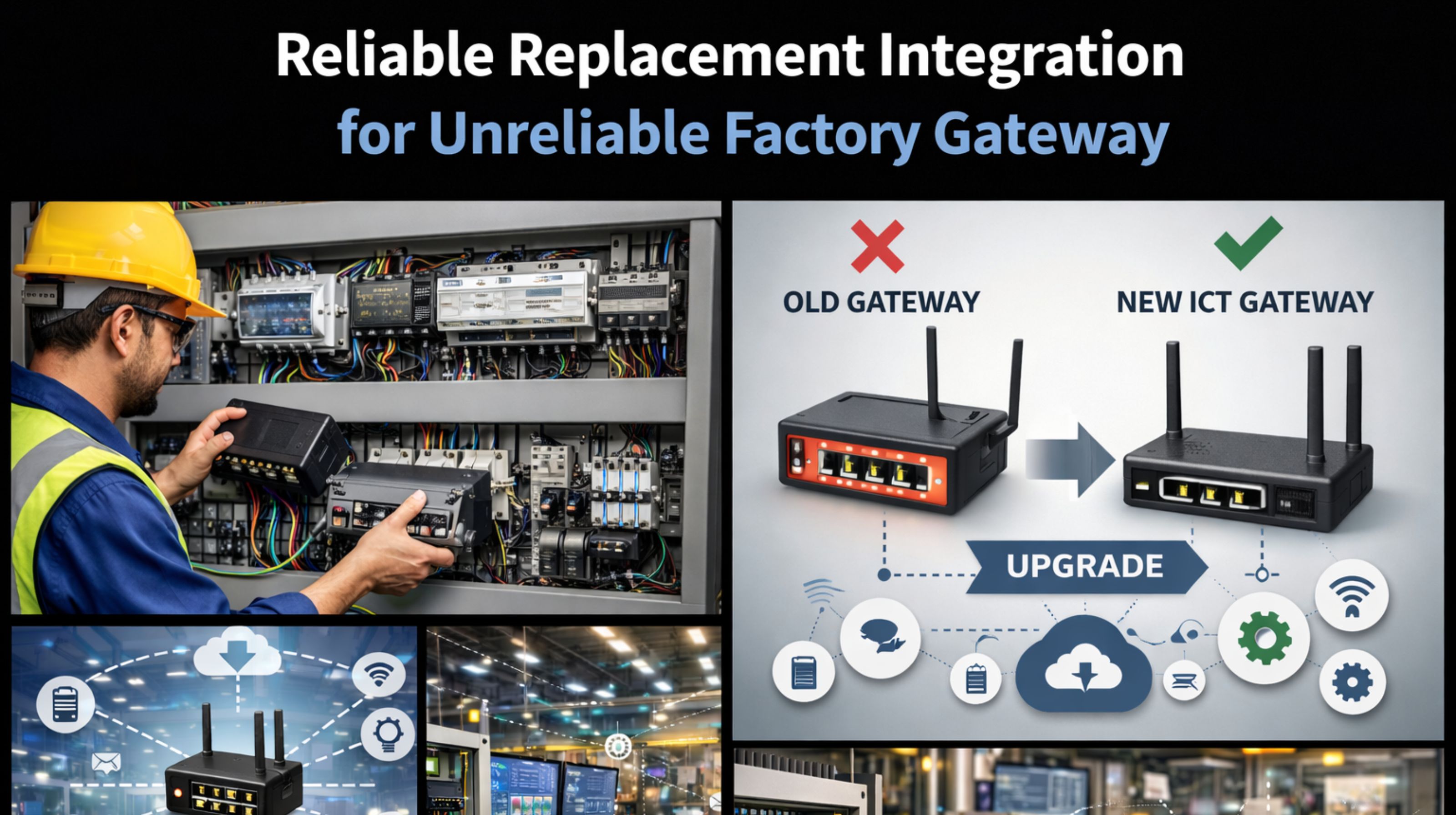
Factory Gateway Replacement Blocking Deployment and Causing Commissioning Delay
Look, if your new factory gateway is stalling the handover, it's probably because it just can't cope with the actual chaos of your floor—the real-time protocols, the burst loads, the stuff that was humming along before. This isn't a missing checkbox on a spec sheet. It's about silent data drift, handshakes that just time out, and the very real, growing cost of every single day that line isn't signed off.
What This Gateway Failure Actually Means on Your Floor
When a gateway swap fails live, you don't get a clean error message. You get retry loops on your Modbus TCP lines. You get malformed packets from PLCs you thought were talking fine. You get queue overflows that quietly corrupt batch data. The hardware is usually fine. The problem is the assumption—that you can do a one-for-one swap without deep, messy protocol coordination. It exposes hidden dependencies in your industrial automation layer that a simple manual mapping will completely miss.
The Reality Under Scale and Live Commissioning Pressure
It's during final commissioning that the real cracks show. The gateway's buffers, sized for a lab test, choke on concurrent device polling. You get sporadic OPC UA timeouts that never showed up before. And that's where the audit exposure kicks in—production data gaps break traceability rules, turning a technical glitch into a compliance escalation and a direct hit to your SLA. The cost isn't just the line being down. It's the mountain of validation paperwork you now have to redo, and the very real risk of blowing past your operational readiness date.
Where Internal Tuning and Assumptions Stop Working
The critical mistake here is thinking transport layer tweaks or a firmware patch can fix a fundamental protocol health mismatch. Teams burn weeks adjusting heartbeat intervals and TCP windows, only to find the real instability is from clock skew between systems or an expired certificate in a secure link—places where configuration alone just fails. That misunderstanding is what causes the real deployment delay, as the project lurches from tuning mode into full crisis reassessment.
Deciding Between Patch, Redesign, or Architecture Replacement
You hit a decision point when the PLC communication failures become systemic. You have to figure out: is this gateway stack just unreliable, or is it architecturally incapable of handling your plant's protocol density? That often forces a tough choice. Do you keep patching, knowing the integration rework costs are just going to climb? Or do you bite the bullet and review the system for something like a coordinated protocol service layer, built to handle multi-source logic natively? The pressure to choose comes from the compounding risk—the next audit cycle, or the next line expansion you have planned.
FAQ
Question: What's the first sign our gateway replacement will cause commissioning delay?
Answer: Honestly, the first sign isn't a total failure. It's inconsistent data under simulated peak load. You'll get correct values 95% of the time, with silent, unreported drops during concurrent polling bursts. The kind of thing that only rears its head during the final site acceptance tests, when the pressure's on.
Question: How does protocol mismatch create audit exposure?
Answer: It creates gaps in your production logs. When an auditor traces a batch back, missing timestamps or out-of-sequence events—caused by gateway instability—become evidence of a broken traceability chain. That leads straight to non-conformance reports and mandatory corrective actions you have to scramble to address.
Question: At what point does scaling break a "compatible" gateway?
Answer: It breaks at the concurrency limit of its session management. A gateway might handle 50 devices perfectly and fall over at 51. Not from bandwidth, but because it exhausts its internal state table, causing random disconnections. At that point, you need a full architectural reassessment, not just a bigger server.
Question: When should we consider a full architecture replacement over fixing the gateway?
Answer: Consider it when the instability shows up across multiple protocol types—say, both Modbus and OPC UA are having issues. Or when the root cause points to the coordination logic itself, not the individual connections. That's a signal you need a system designed for protocol diversity from the ground up, like a dedicated universal engine, not just a better gateway.