Energy Meter Pulse Counter Protocol Integration IIoT Platform
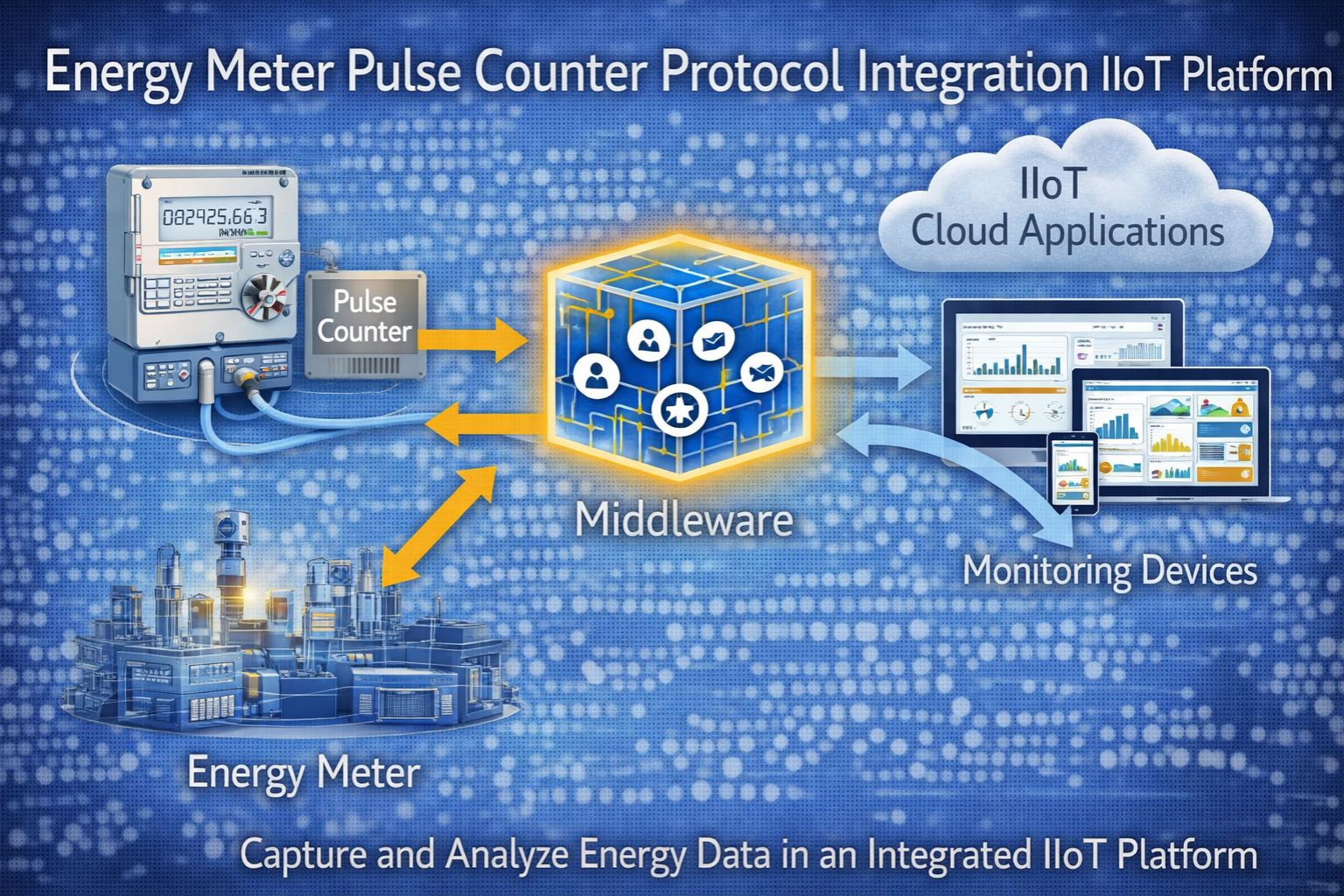
Energy Meter Pulse Counter Protocol Integration IIoT Platform
Getting energy meter pulse counter protocols into an IIoT platform is one of those critical data points that often fails silently. You get a simple protocol mismatch, or a timing drift between the meter's pulse and the gateway's counting logic, and suddenly you have cumulative errors in the kWh data. That's what ends up distorting your billing and making your load analytics useless.
What Pulse Counter Protocol Integration Really Means
In a real IT/OT environment, here's what this actually looks like: you're mapping a physical pulse—usually a dry contact closure or an optical signal from the meter—to a digital counter in a gateway. That counter then translates the count into energy units using a pulse constant, and sends it up via something like Modbus. The failure point is almost never the connectivity itself. It's the semantic alignment of that count over time that gets you.
The Reality of Live Metering Data at Scale
At live industrial scale, things get messy. You get packet buffering in the gateway when the network congests, which lags the timestamp for a whole batch of pulses. Then the IIoT platform associates that energy with the wrong billing interval. Teams usually just ignore the need for protocol health audits to check the time sync between the meter's pulse and the gateway's clock. That's how you get data drift that compounds every single month.
Common Mistake: Assuming the Protocol Handles Accuracy
The biggest misunderstanding that causes instability is thinking the industrial protocol itself ensures data fidelity. It doesn't. Protocols like Modbus just transport whatever count value the gateway gives them. If the gateway's counter firmware resets on a power cycle, or misses pulses during a voltage dip, the protocol will faithfully transmit the wrong number. That creates a permanent offset in your energy database that you'll have to manually reconcile later.
When to Tune, Reconfigure, or Redesign the Integration
The decision line is pretty clear. If the error is sporadic and under 2%, you can probably just tune the gateway's polling and buffering. If you see consistent drift across multiple meters, you need to reconfigure the pulse constant and audit your timestamp alignment. But if internal fixes keep failing and you're facing persistent data mismatches that hit financial compliance? That's when you need a redesign—something with a dedicated, hardened pulse counter module that has its own time-stamping logic. That's the point where getting snipcol to look at your protocol translation integrity can save you from a costly rollback.
FAQ
Question: What causes energy data to be wrong after pulse counter integration?
Answer: Usually, it's a mismatch. The meter's actual pulse output doesn't line up with the pulse constant configured in the gateway software. That creates a multiplicative error in every single calculated energy value.
Question: Can network latency affect pulse counter data?
Answer: Absolutely, and it's a big deal. If the gateway batches counts and sends them over a slow network, the platform might assign the energy to the wrong time interval. That completely distorts time-of-use analytics and throws off peak demand calculations.
Question: How do you verify a pulse counter integration is working correctly?
Answer: You have to do a parallel verification. Compare the platform's logged kWh against a manual or master meter reading over a decent period of actual consumption. Just seeing a "connected" status on the IIoT dashboard tells you nothing.
Answer: The real risk is financial and compliance exposure. Bad data means incorrect utility billing for tenants, potential regulatory non-compliance for energy reporting, and insights so faulty they drive poor decisions on things like load shedding or capital planning.