Edge Gateway Protocol Translation Latency
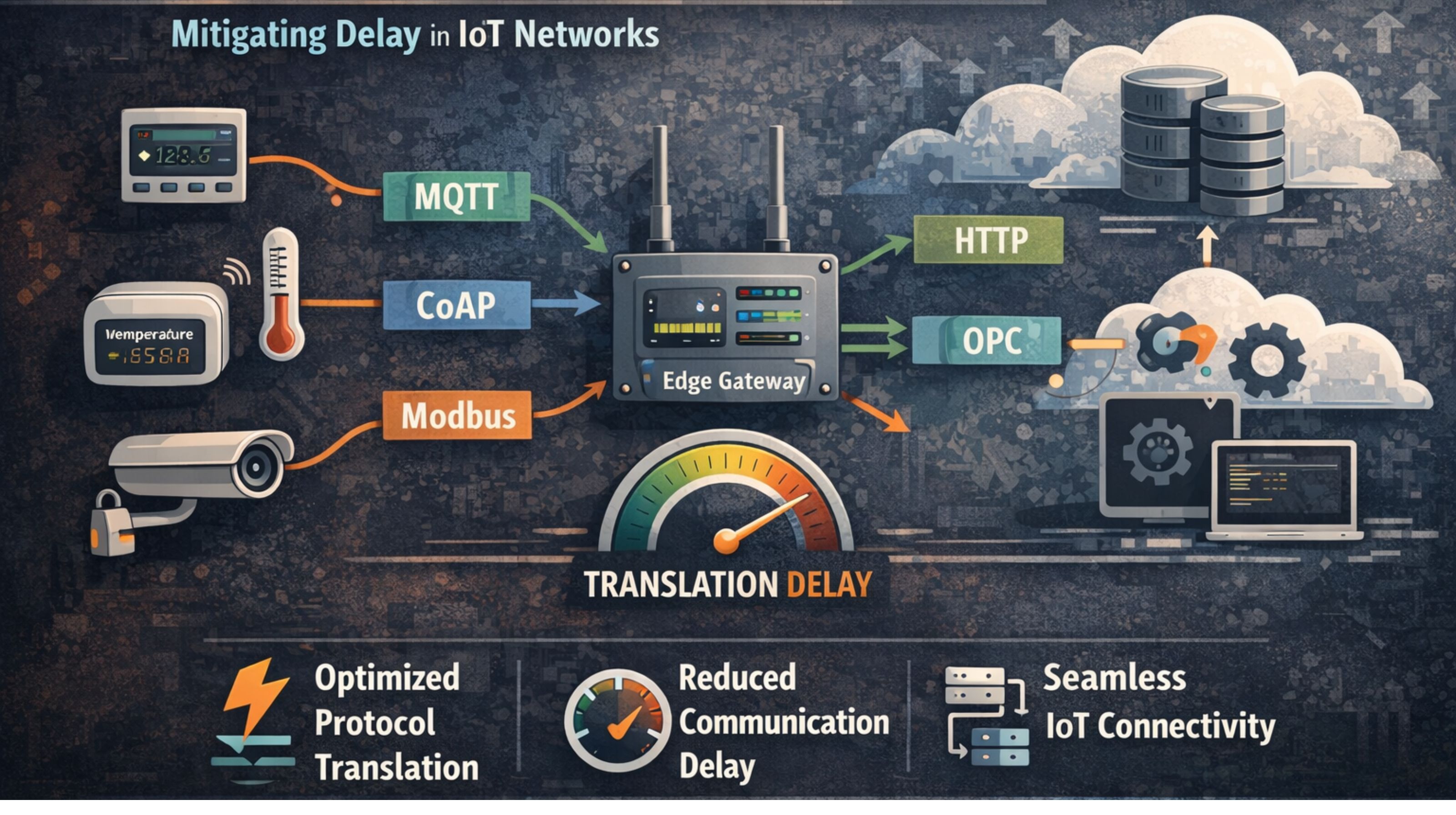
Edge Gateway Protocol Translation Latency
When we talk about performance at the edge, protocol translation latency is a big deal. It's the delay that happens when your gateway converts data from one format to another—like turning Modbus into MQTT. And that delay directly affects how responsive your entire IoT or industrial system feels.
Understanding Protocol Translation at the Edge
Think of edge gateways as the translators between your field devices and the cloud. They're constantly taking data from legacy industrial protocols and converting it into something modern IP-based systems can understand. That conversion process isn't magic—it takes a measurable amount of time, and that's the latency we're talking about.
Key Factors Influencing Translation Delay
So what actually causes this delay? A few things. First, it depends on how complex the conversion algorithm is. Some protocols are just trickier to translate than others. Then there's the gateway's own hardware—its processing power sets a hard limit on how fast it can work. And finally, the size of the messages matters. Bigger messages, or ones that need to be broken apart and reassembled, add more overhead.
Measuring and Benchmarking Translation Latency
To get a real handle on this, you need to measure it properly. That means using the right tools in a controlled setup. Common things to look at are the round-trip time for a full translated transaction, or the one-way delay from a sensor to the gateway's output. The key is to compare different gateway setups—different firmware, different hardware—under the exact same load.
Strategies to Minimize Translation Overhead
You're not stuck with whatever latency you start with. There are ways to reduce it. Choosing gateways with hardware acceleration for specific protocols can make a huge difference. So can optimizing the firmware to use efficient, pre-built translation libraries. It also helps to be smart about what data you send—filtering at the source means less data needs translating in the first place. And for data that isn't time-critical, batching it up can improve overall throughput.
FAQ
What is edge gateway protocol translation latency?
It's the time delay that gets added when an edge gateway converts a message from one communication protocol to another—say, from Modbus TCP to MQTT.
Why is this latency a problem for IoT systems?
High latency can make a system feel sluggish, break real-time control loops, and lead to outdated data in time-sensitive applications like factory automation.
Which protocols typically cause the highest translation latency?
Translations that involve complex, stateful, or binary-heavy protocols—things like OPC UA or some proprietary serial protocols—usually take longer than simpler conversions.
Can software updates reduce existing translation latency?
Absolutely. Firmware updates that include more efficient codecs or fix bugs can often improve translation performance without needing to swap out any hardware.
How does network congestion affect translation latency?
Even though translation itself is a processing job, network congestion can cause backups in the gateway's input buffer. That makes the total delay you experience much worse.
Is hardware or software more important for low translation latency?
You really need both. Powerful hardware gives you the capacity, but well-optimized software determines how efficiently you use that capacity for the translation task.
What role does the gateway's operating system play?
A real-time operating system (RTOS) with predictable scheduling can offer much more consistent translation latency compared to a general-purpose OS.
How should translation latency be documented in a system specification?
It should be listed as a maximum allowable delay under a specific load, usually in the gateway's performance datasheet or as part of a service-level agreement.