Data Synchronization Lag Delaying Operations: Diagnosis & Resolution
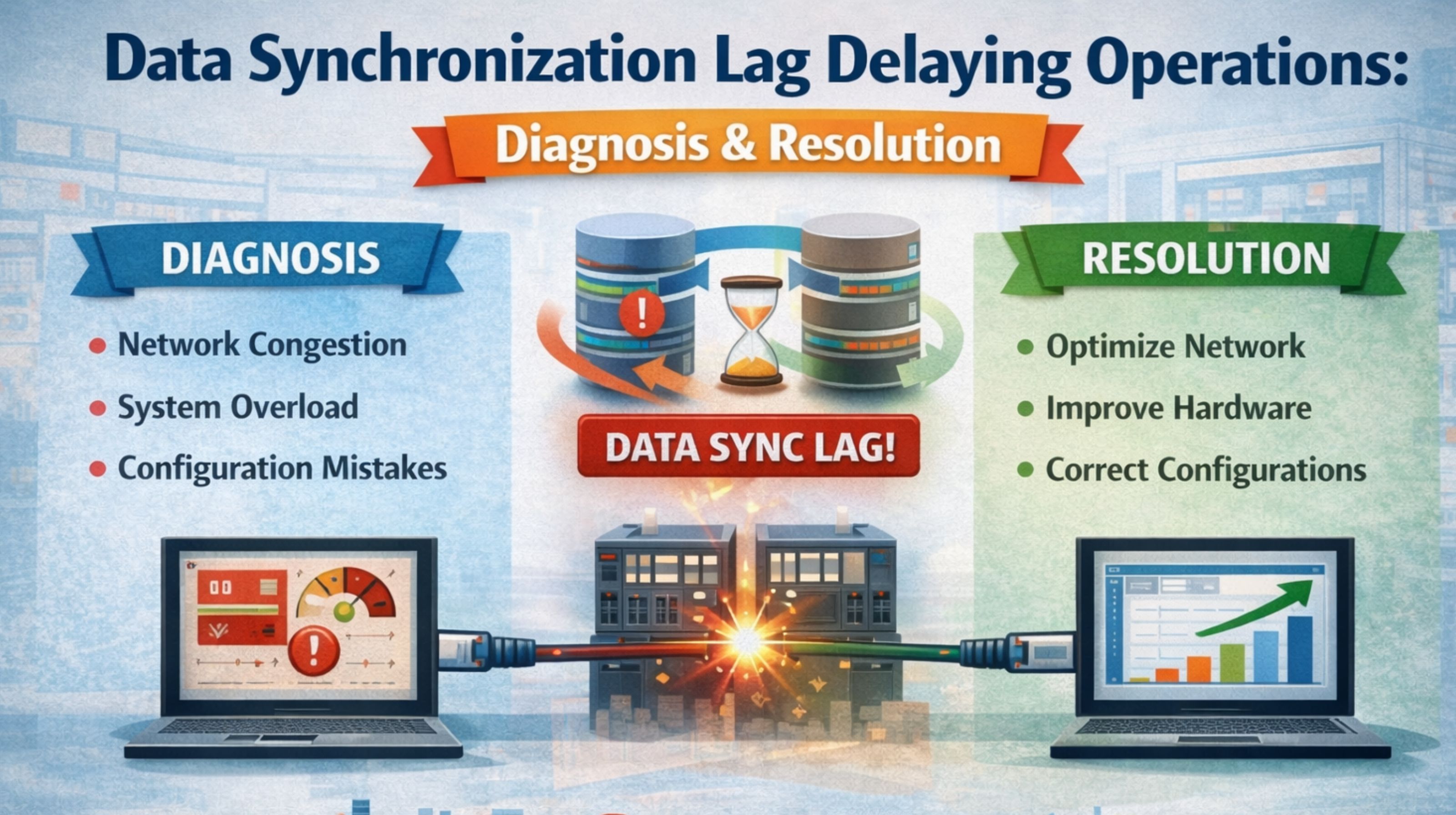
Data Synchronization Lag Delaying Operations: Diagnosis & Resolution
Data synchronization lag is not a minor latency issue; it is a direct cause of operational delays, commissioning hold-ups, and real-time control instability that blocks deployment milestones and risks audit failures. When state data between PLCs, historians, and control systems drifts, you face immediate consequences: automated sequences stall, batch processes fail quality checks, and safety interlocks operate on stale information, creating tangible downtime and compliance exposure.
Why Synchronization Lag Becomes a Critical Path Blocker
The core failure is usually a protocol or architectural mismatch where data update cycles just aren't aligned with what the process actually needs. This often shows up as Modbus TCP poll cycles missing critical state changes, OPC UA subscriptions failing to keep up under burst load, or gateway buffers overflowing during peak data generation. The business impact is a direct commissioning delay—systems can't be signed off until data coherence is proven, which leads straight to SLA breaches and contractual penalties.
Reality Check: What Happens Under Scale and Audit Pressure
During commissioning or peak production, the lag goes from annoying to catastrophic. Retry loops from timeouts start eating up network bandwidth, malformed packets from overwhelmed gateways cause entire data streams to drop, and historians record inconsistent process states. Then during an audit, that inconsistency gets flagged as a control system integrity failure, putting operational certification on hold. The cost suddenly shifts from minor tuning to major integration rework and project timeline overruns.
The Mistake: Assuming More Bandwidth or Faster Polling Fixes It
The critical misunderstanding is treating lag as a simple network speed issue. You'll find that tuning just stops working when the root cause is architectural: maybe a point-to-point gateway stack can't handle multi-protocol concurrency, or a custom bridge lacks the stateful session management to handle OPC UA failover and Modbus TCP reconnections simultaneously. You hit a hard boundary where adding more polling threads only increases CPU contention and packet collision, which ironically makes the lag worse.
Decision Help: Patch, Redesign, or Replace the Architecture
You have to decide whether to patch the current integration, redesign the data flow, or replace the bridging architecture entirely. Patching might work for isolated issues like clock skew or buffer sizing. A redesign is needed for a fundamental protocol mismatch. Replacement becomes necessary when you're facing persistent industrial integration instability across diverse sources—where a unified protocol coordination layer, sometimes involving tools like snipcol for managing multi-source logic, is really the only way to ensure deterministic synchronization and audit-ready data lineage.
FAQ
Question: What's the first sign of dangerous synchronization lag?
Answer: The first operational sign is control actions based on outdated data, causing process variability or sequence faults. It's not just a historian graph mismatch anymore.
Question: How does this lag create audit exposure?
Answer: Auditors trace data from sensor to report. Inconsistent timestamps or states across systems fail data integrity checks, which can halt certification entirely.
Question: When does tuning poll rates or timeouts stop working?
Answer: When the lag is caused by architectural limits—like gateway concurrency ceilings or protocol translation overhead—and not just network latency.
Question: Should we consider a full architecture replacement?
Answer: Consider replacement when the lag causes recurring commissioning delays across multiple systems. That's a strong indicator of a core protocol coordination failure.