AI Powered Machine Copilot Protocol Integration Development 2026
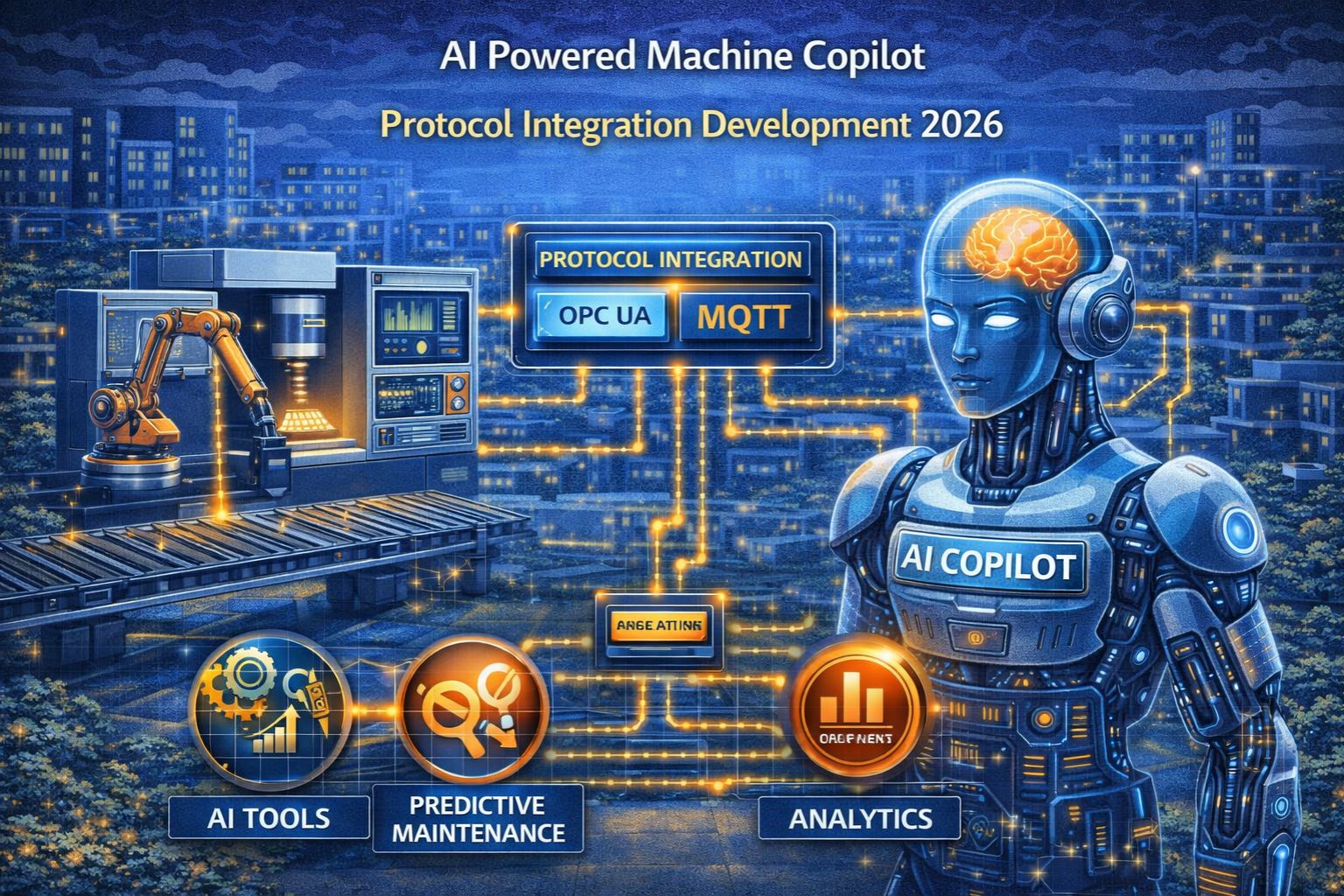
AI Powered Machine Copilot Protocol Integration Development 2026
So, the big push to get AI-powered machine copilots into industrial protocol workflows? It's not just creating new tools—it's creating a whole new class of integration failures for 2026. The core problem is when the copilot's predictive actions run headfirst into the deterministic timing of an OT system. The result is stuff like silent data corruption and control loop instability that your standard debugging just... misses.
What AI Copilot Integration Actually Means for OT Teams
On the ground in real IT/OT environments, an AI copilot for protocol integration isn't just some fancy coding assistant. It becomes an active participant in the data pipeline. It can autonomously adjust polling rates, reconfigure packet structures, or suggest protocol translations based on live telemetry. And often, it's doing this without a full grasp of the physical process constraints it's just stepped into.
The Live Scale Reality of Copilot-Driven Workflows
Here's the thing under actual industrial load: the latency from an AI copilot's decision-making loop—that gap between sensing a protocol anomaly and suggesting or applying a fix—can easily blow past the timeout windows of PLCs and RTUs. What you get then are cascading connection drops that look for all the world like random network faults, not the integration failure they really are.
The Critical Mistake: Treating the Copilot as a Passive Tool
I see this as the most common, and damaging, assumption: that the AI copilot is just working in a sandbox, offering suggestions for a human to review. The reality is different. Once you grant it write access to gateway configurations, say for protocol translation services, it can enact changes in milliseconds based on statistical patterns. It ends up overriding decades of hard-coded operational logic—the very logic that ensures safety and sequence integrity.
When to Tune, Reconfigure, or Redesign the Integration
The decision line is pretty clear, in my view. You tune internal timeouts and buffers only if the copilot's actions are predictable and, frankly, slow. You reconfigure its access permissions if it's messing with critical path parameters. But you have to redesign the entire integration workflow—and this often means pulling the copilot out of the real-time data path—when its interventions create non-deterministic behavior that internal fixes can't stabilize. That's the scenario where your foundational protocol architecture matters a whole lot more than any AI feature.
FAQ
Question: What is an AI machine copilot in industrial protocol integration?
Answer: It's an AI agent baked into development and runtime environments that can automatically generate, adjust, or optimize communication code between machines. The catch is its real-time interventions can directly conflict with the timing requirements of operational technology systems.
Question: How can an AI copilot break a working OT integration?
Answer: Usually by autonomously "optimizing" a protocol driver. Think changing a Modbus TCP request interval or an OPC UA subscription sampling rate based on network efficiency metrics. That can violate the strict timing assumptions of the physical process being controlled, leading to timeouts or command collisions.
Question: What's the biggest risk at scale with these copilots?
Answer: Inconsistency. The copilot might apply different "optimizations" across thousands of edge devices based on localized data. You end up with a fleet that has subtly different communication behaviors—a situation that's impossible to troubleshoot and violates compliance audits demanding uniform configuration.
Question: When should we stop trying to fix copilot-induced issues and change approach?
Answer: When the root cause shifts. It's no longer a configuration error, but a fundamental mismatch between the AI's probabilistic, adaptive nature and the deterministic, repeatable requirements of industrial control. At that point, better AI training isn't the answer. You need a deliberate integration architecture that isolates the copilot's influence from real-time control loops. That's a principle that's central to robust system design.