Agentic AI Automation: Elevating Human Potential
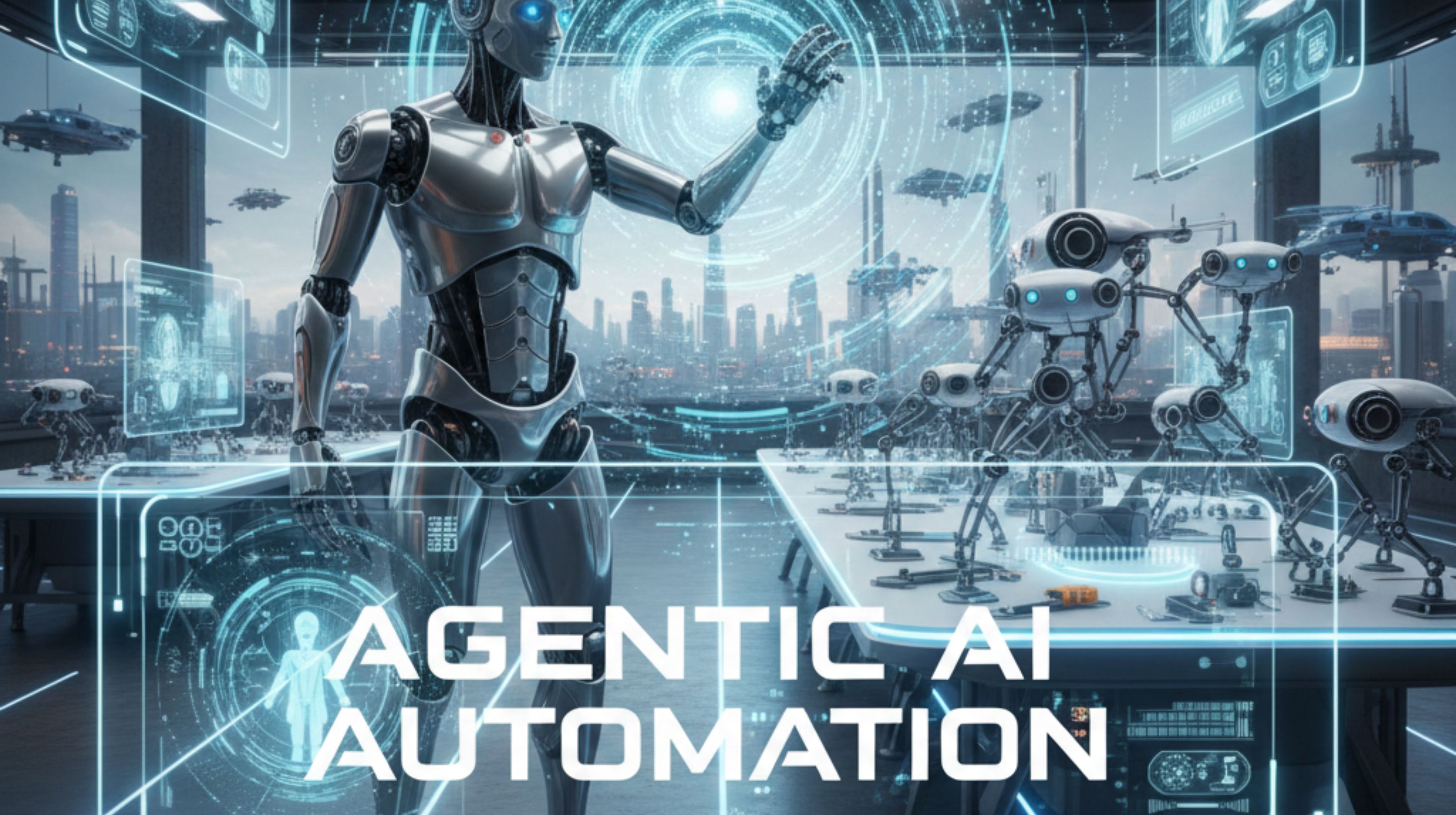
Lately, there’s been a shift in how we talk about automation, moving beyond mere task replication to something far more profound: Agentic AI Automation. It’s not just about speeding up processes anymore; it’s about delegating entire cognitive workflows. I remember staring at my laptop screen late one evening, the office lights dimming around me, feeling that familiar pinch of dread about the mountain of follow-ups and data analysis waiting for me. My chai had gone cold, and the street noises from outside were starting to pick up. That’s when the idea of truly autonomous AI agents really hit home, not as a futuristic fantasy, but as a potential lifeline.
From what I’ve seen personally, many of us approach new tech with a blend of excitement and a deep-seated suspicion. We love the idea of efficiency, but we’re hesitant to hand over the reins, especially when it comes to things that feel inherently "human." There’s a quiet resistance to giving up control, a little voice asking, "What if it messes up? What if I look redundant?" This isn’t just about manual labour; it's about intellectual output. The first time I experimented with letting an agentic system manage a complex research task, breaking it down into sub-goals and then executing them, a knot in my stomach tightened. It felt like asking someone else to think for me, a bizarre sensation.
After watching this play out repeatedly, I’ve realized something contrarian: true automation with agentic AI isn't about removing humans from the loop entirely, but about elevating them. It’s not a path to redundancy, but a ladder to higher-order problem-solving and creativity. My office colleague, a brilliant software architect, was bogged down by endless architectural review documentation – a crucial but repetitive task. He'd spend hours cross-referencing, formatting, and standardizing. Now, with a carefully designed agent, that initial draft is often ready, adhering to all the fiddly company guidelines, giving him back precious time to actually architect, not just document. You could almost see the tension leave his shoulders, the relief like a soft sigh in the busy open-plan.
The real challenge isn't the technology itself, but learning to trust it, and more importantly, learning to define problems precisely enough for an agent to solve. It’s much like training a new, brilliant, but literal-minded intern. You can’t just say, "Fix this messy data." You need to articulate, "Identify all entries in column B where the value is alphanumeric and less than 5 characters, then correct them to a 5-character numerical format by padding with leading zeros." The clarity required is almost a meditation, a sharpening of one’s own understanding of the task. That’s the practical takeaway many people learn late: the effort isn't in operating the tool, but in mastering the prompt.
I remember one instance when a friend, a small business owner dealing with daily inventory checks, tried to implement something similar. Initially, she was frustrated. "It’s just not getting it," she'd sigh, looking at her crumpled printouts, the smell of fresh ink still lingering in the air. She wanted it to "understand" the nuances of her small kirana store, the way a human would notice a customer lingering near the biscuits. But once she broke down her inventory process into atomic steps – checking for stock below five units, flagging expiring items, generating reorder lists, cross-referencing supplier prices – the system began to shine. Her confusion slowly gave way to a quiet admiration, a small smile playing on her lips as she showed me the auto-generated list, accurate to the last ₹.
This shift feels less like a technological revolution and more like a quiet evolution of our working relationship with tools. We've always used tools to extend our physical capabilities – a shovel to dig, a crane to lift. Now, we're building tools that extend our cognitive reach. The initial sense of bewilderment, the slight fear of the unknown, slowly morphs into a profound appreciation for the newfound headspace. It’s like clearing out a cluttered room in your mind, making space for fresh ideas. The hum of the AC unit and the distant chatter of colleagues used to feel like background noise to my own internal chaos; now, they’re just sounds in a clearer space.
The beauty of Agentic AI Automation lies in its ability to handle the repetitive, the complex but structured, freeing up human intellect for what it does best: innovating, empathizing, making truly nuanced decisions that require subjective judgment. Imagine not just automating a report, but having an agent monitor market trends, identify anomalies, and even draft an initial analysis, then present it to you for your final, human touch. That’s not replacing; that’s enhancing. It’s the difference between a rough sketch and a masterpiece, where the agent provides the scaffolding, and you provide the artistic vision.
This journey from initial confusion to profound clarity has been illuminating. It’s not about machines taking over, but about designing a symphony where human ingenuity and machine efficiency play in harmony. The confidence it instills, knowing that routine tasks are being handled with diligence and precision, allows for a mental lightness that's truly liberating. It means more time for strategic thinking, for mentorship, for those serendipitous moments of creativity that often get lost in the daily grind. We’re not just building smarter systems; we’re crafting a future where our human potential can truly soar, unburdened by the relentless tide of tasks. It’s a quiet promise, whispering of a more thoughtful, more intentional way to work and live, letting Agentic AI Automation shoulder the structured load.